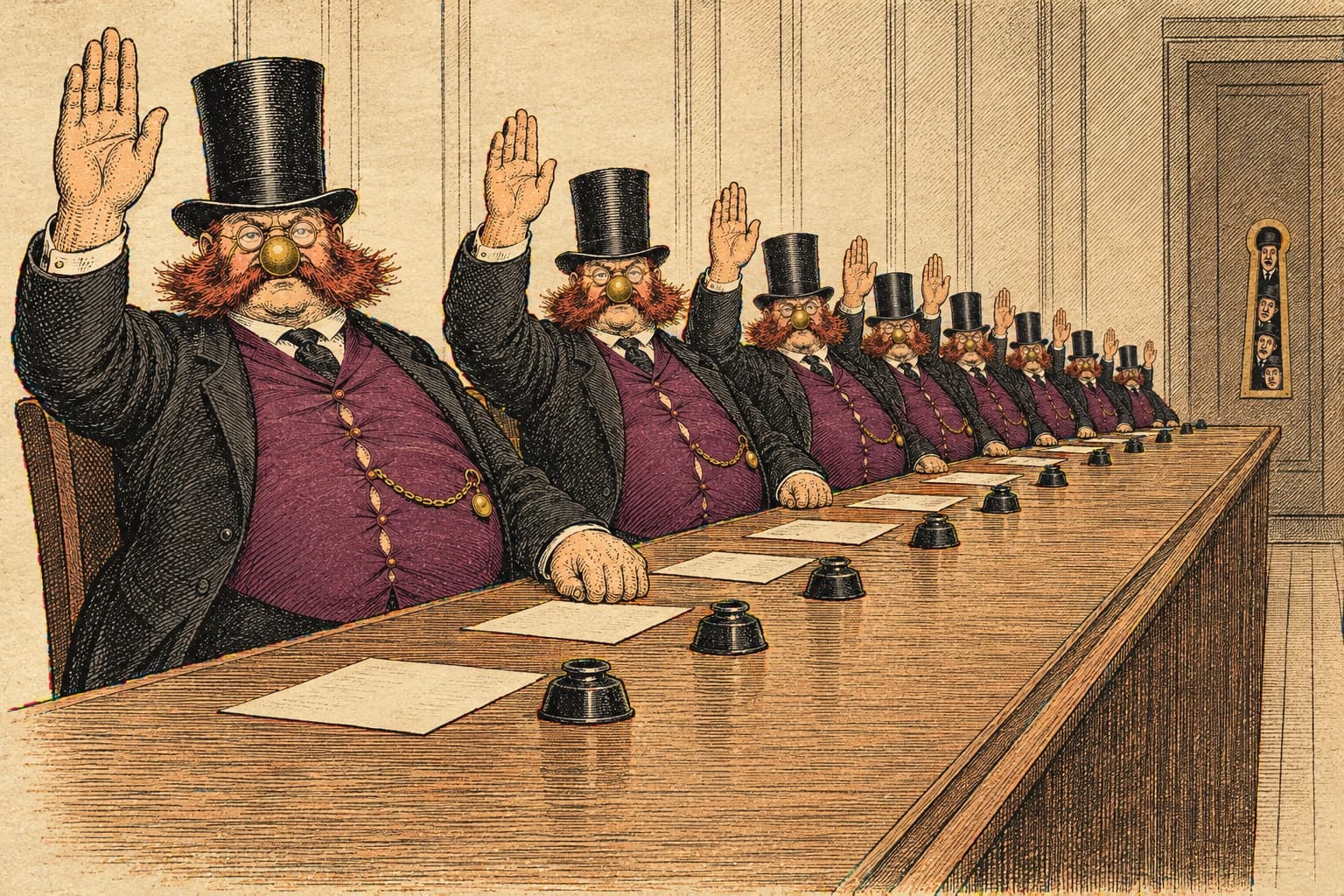
Vol. I · No. 1 · The centre spread
The tycoon wins every cover
Canvas from $1,800 · Paper proof $650 · Twenty-five of each
Sit for Your CoverMoney is the funniest subject in painting, and the people who have the most of it know the joke best.
Erasmus Plinth owns a railroad, a newspaper, a bank, a shipping line and the committee investigating all four. He never existed, and he has never lost.
Ten covers of his weekly hang here, drawn the way Puck drew the trusts in the 1880s: his belly a perfect circle, his hands like shovels, his head a pin on top. Each cover is printed on canvas twenty-five times and no more. Under every picture runs its caption, and the caption is the title.
See the Ten CoversThe magnate on the cover can be you
Send one photograph and write the line that runs beneath it. You keep your own face; the coat, the scene and the caricature are Plinth’s.
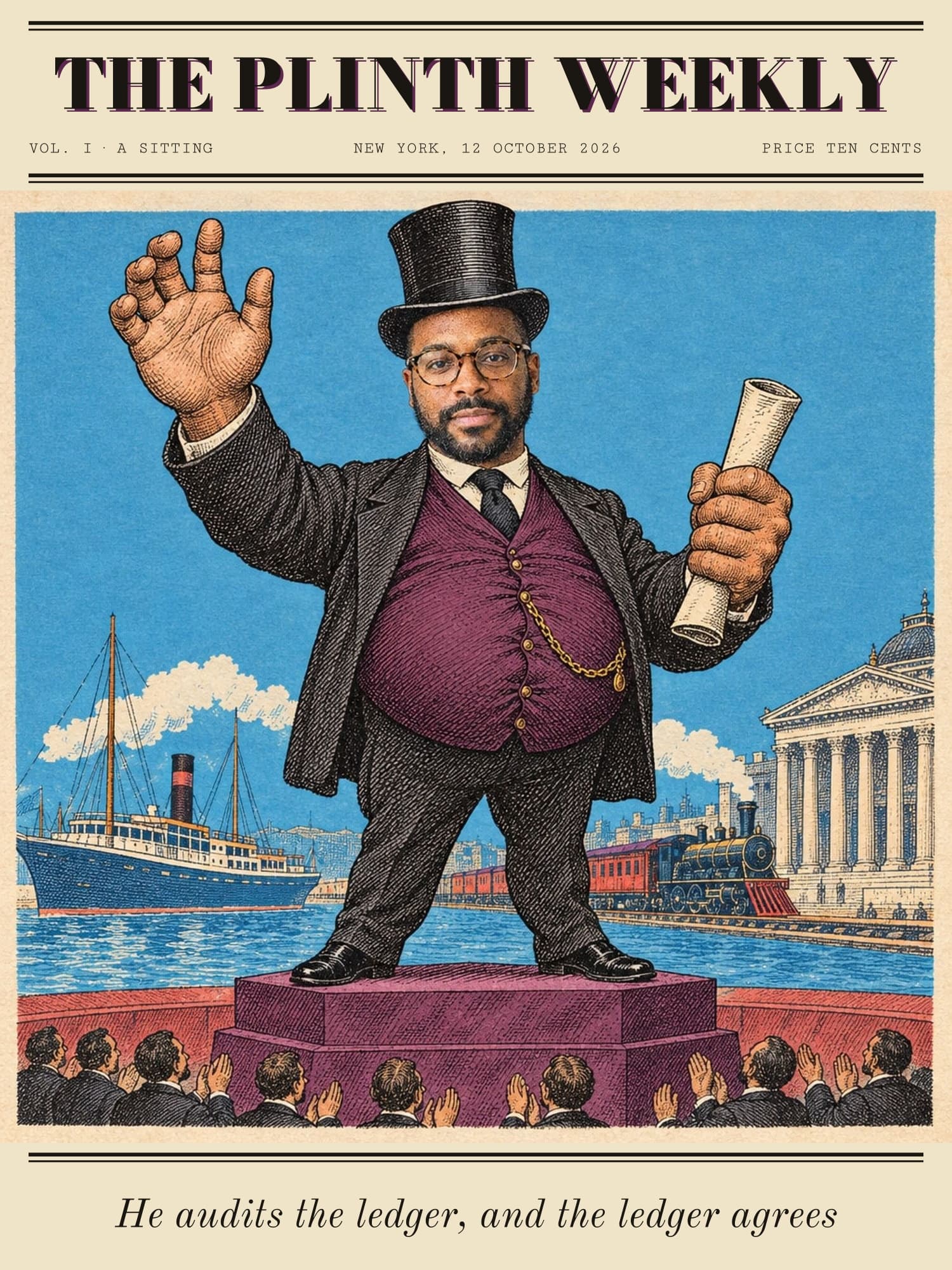
Pen and crosshatch under four flat stones, your caption set in type below. You keep your own face; the circle belly and the shovel hands are Plinth’s joke, and on this cover you wear them.
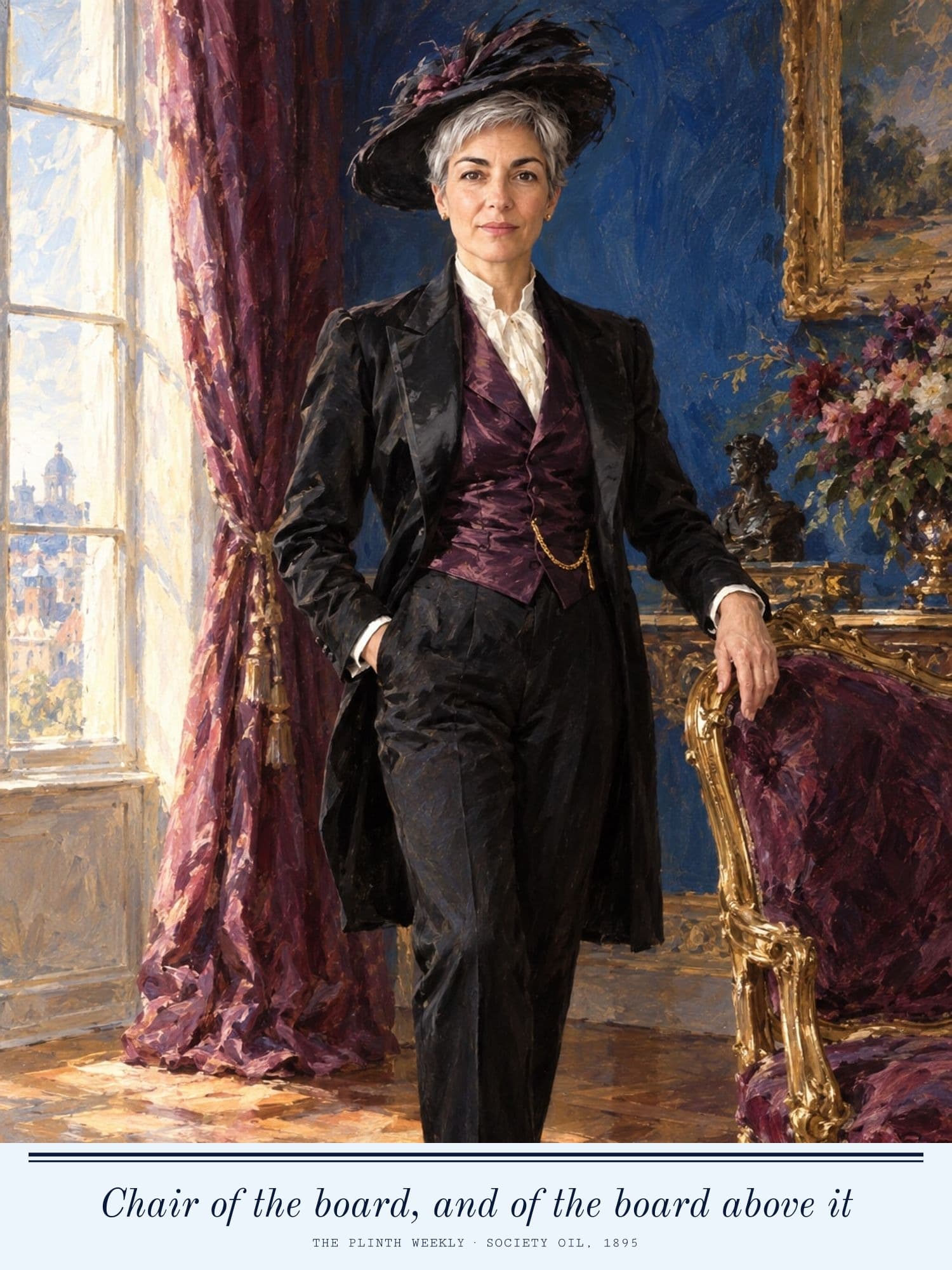
After the society painters of the 1890s: full length, at ease in a drawing room, your caption on the plate beneath.
Ada and Tobias are people we made up to show the two manners. A sitting is numbered outside the twenty-five, and costs the edition price at the same size plus $600.
See the Ten Covers
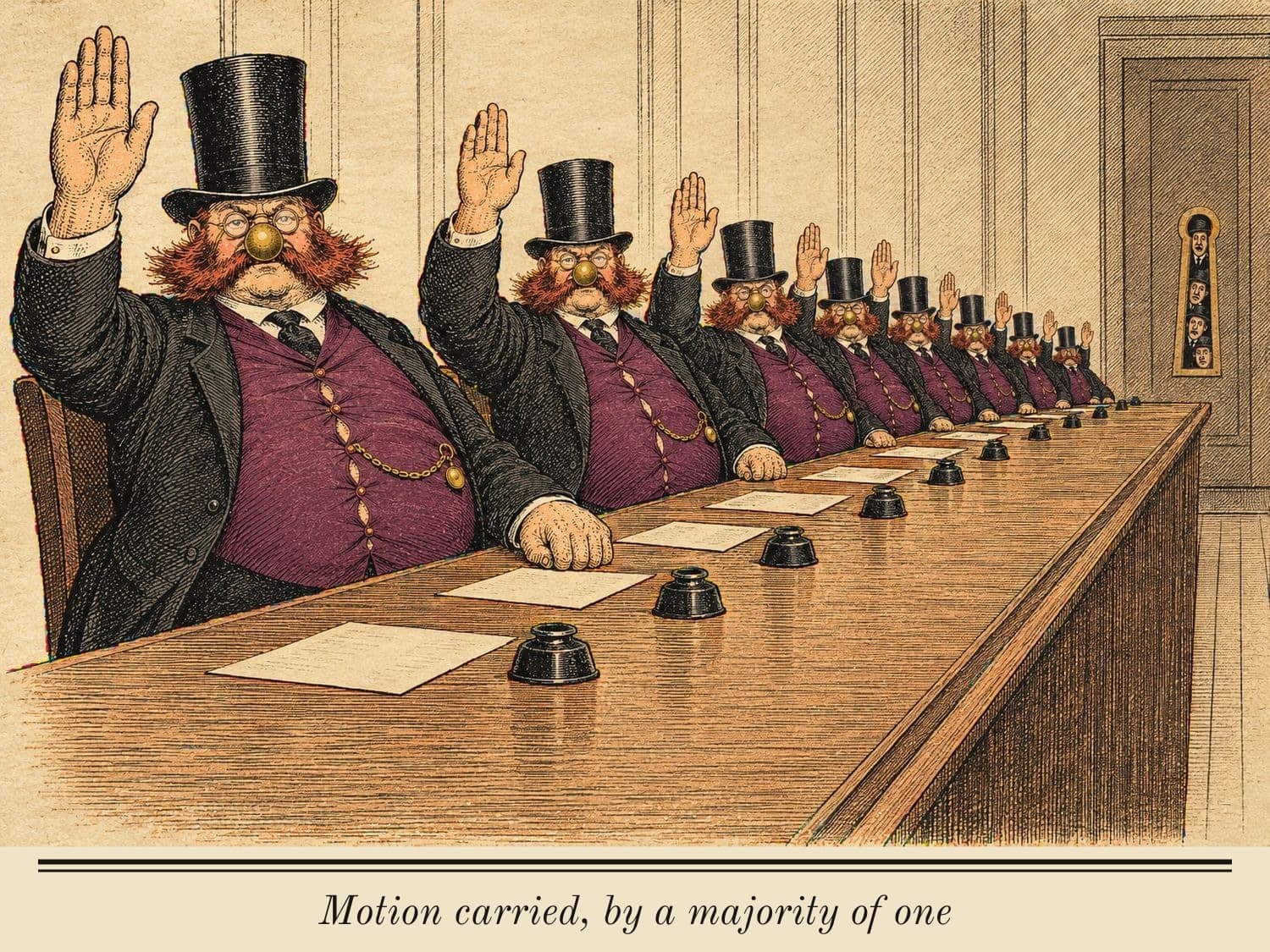 No. 1 · Edition of 25The Bosses of the BoardroomMotion carried, by a majority of one
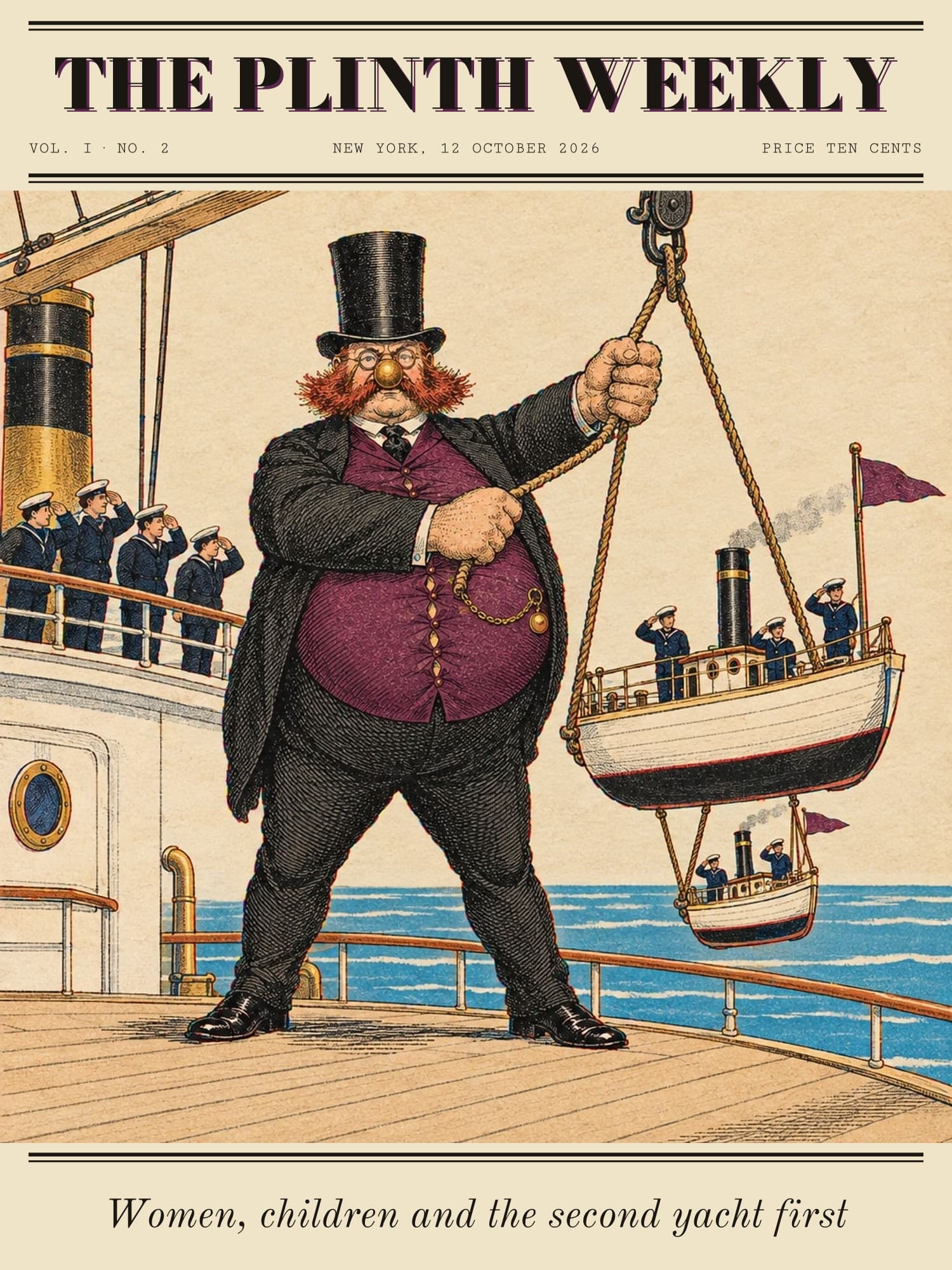 No. 2 · Edition of 25LifeboatWomen, children and the second yacht first
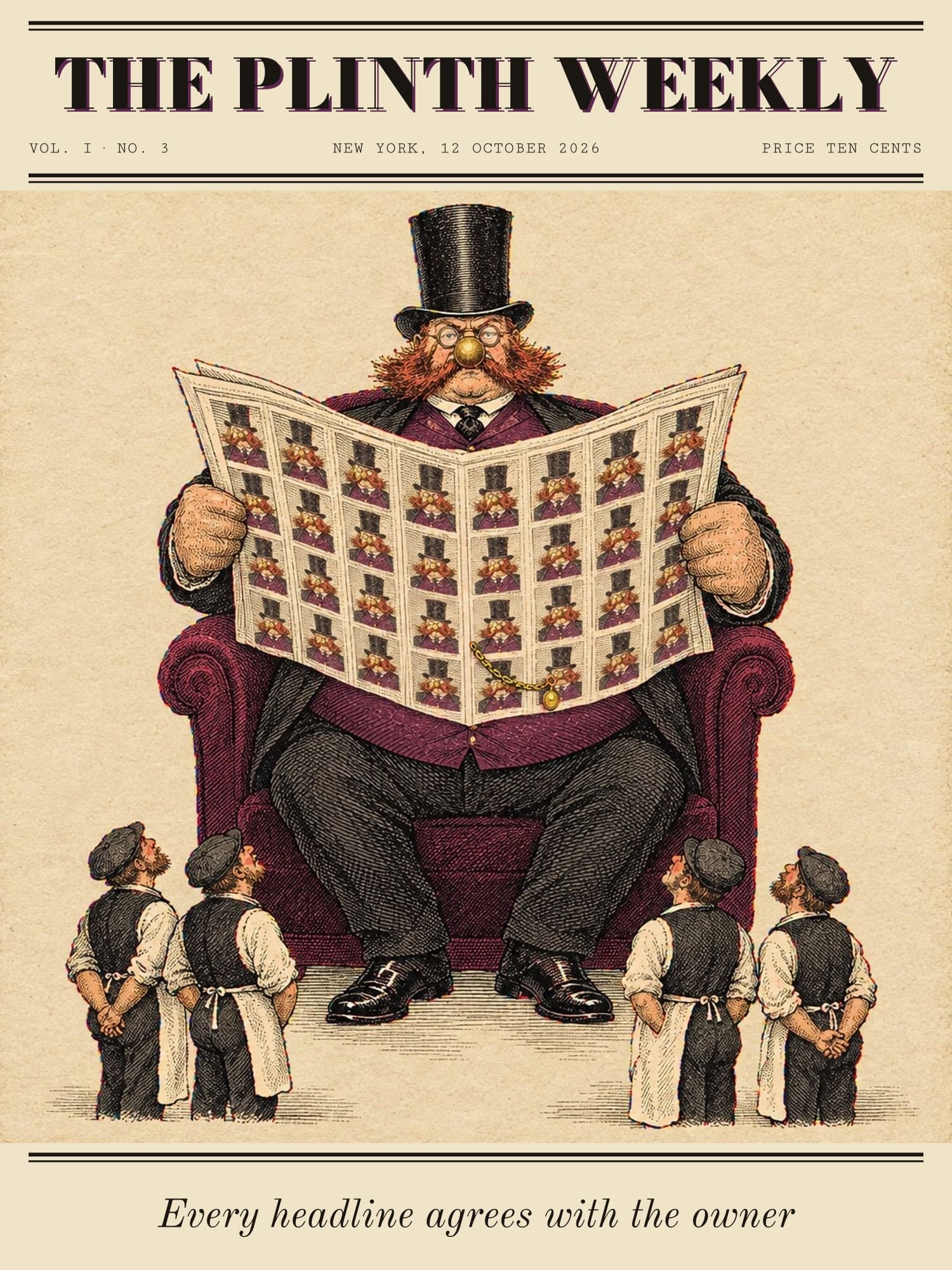 No. 3 · Edition of 25The Free PressEvery headline agrees with the owner
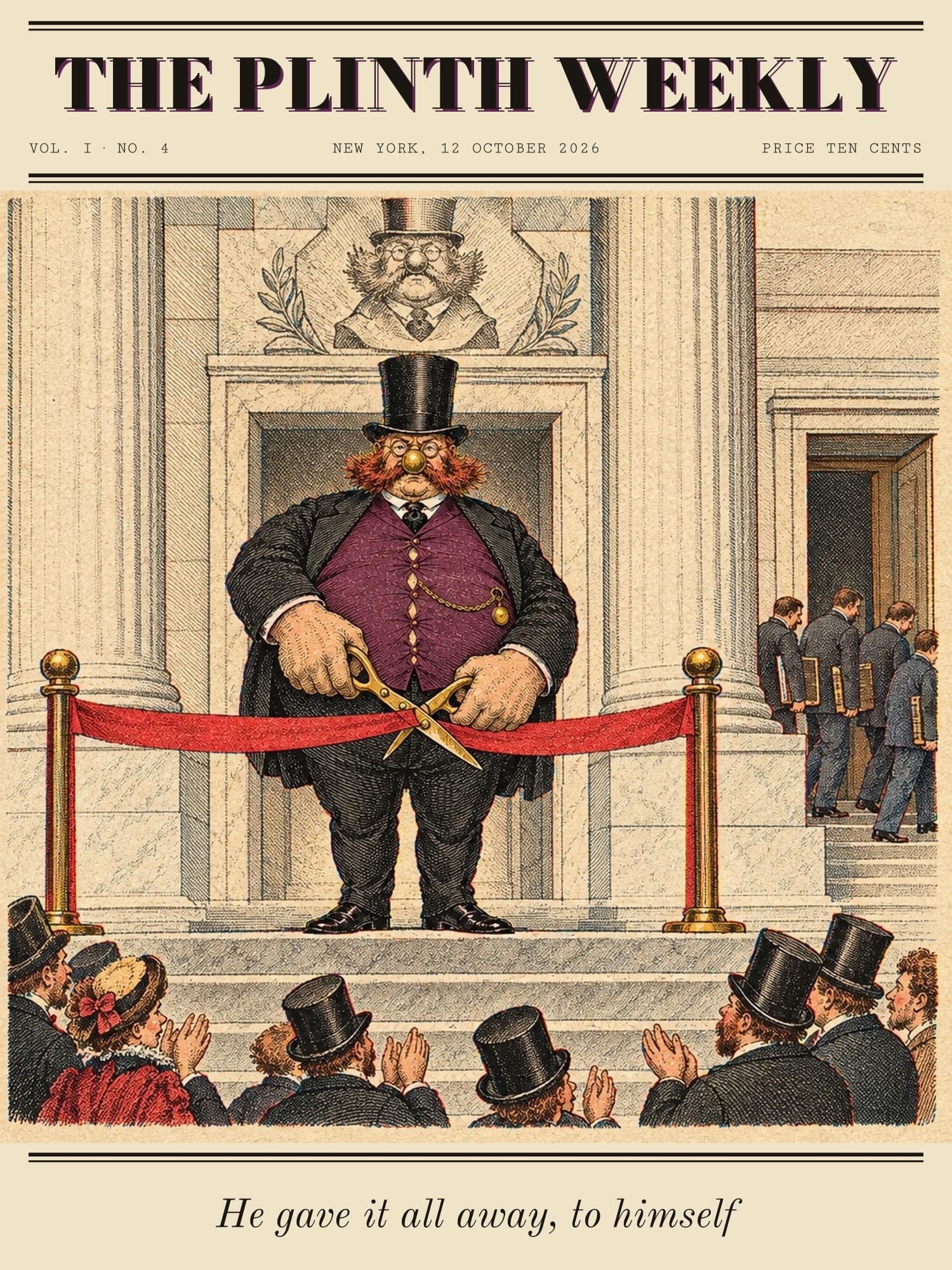 No. 4 · Edition of 25PhilanthropyHe gave it all away, to himself
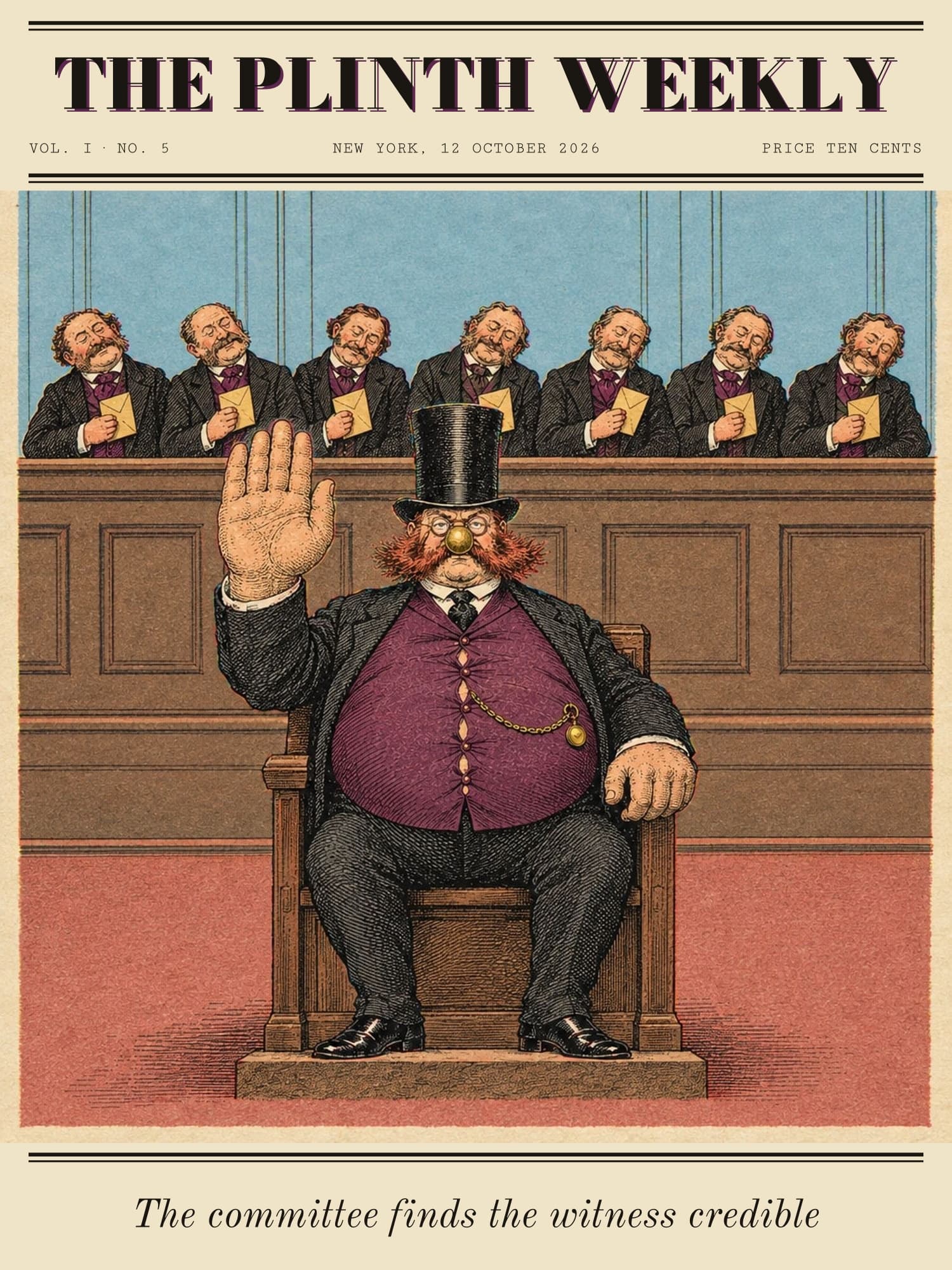 No. 5 · Edition of 25The CommitteeThe committee finds the witness credible
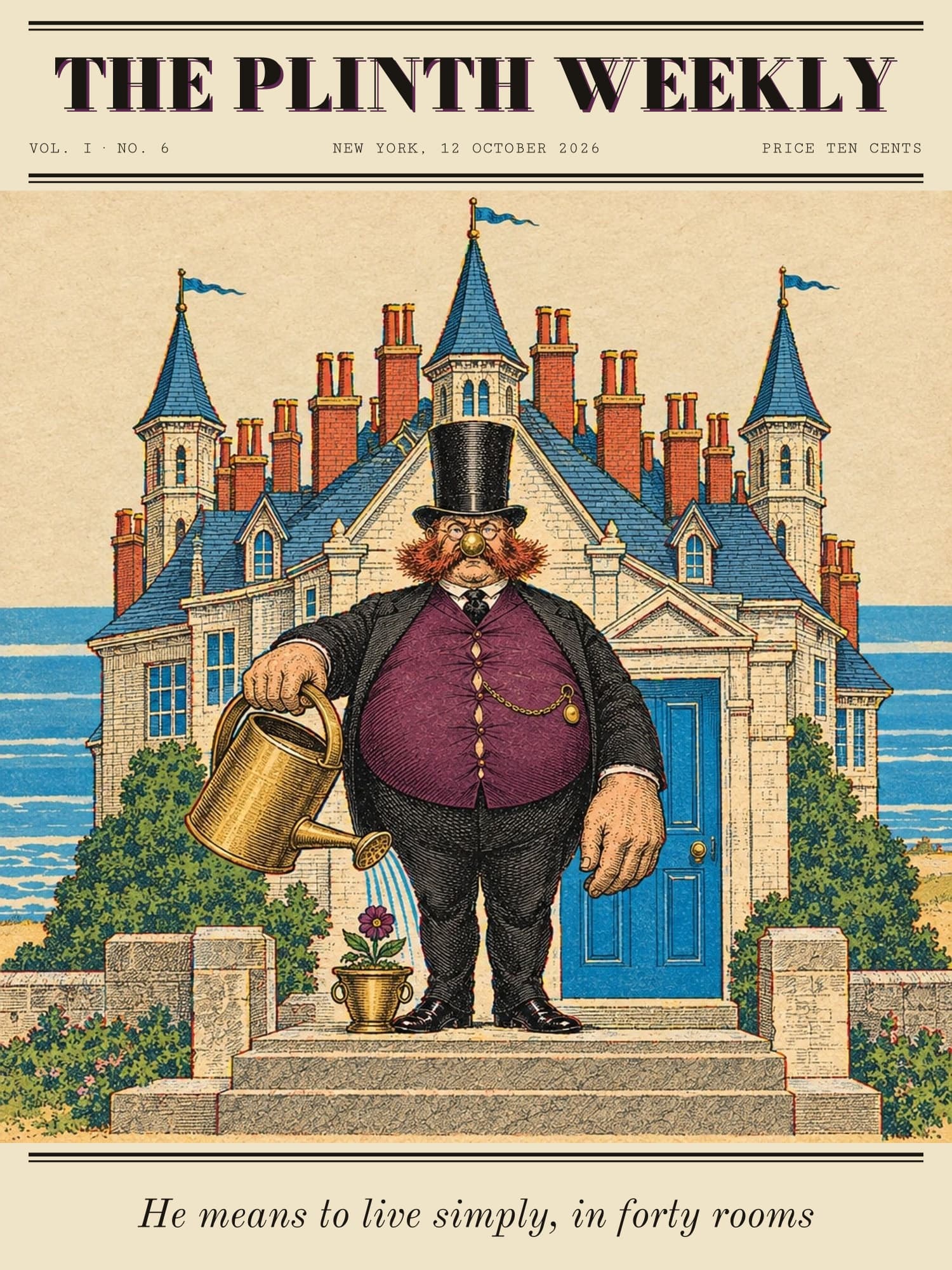 No. 6 · Edition of 25A Modest RetirementHe means to live simply, in forty rooms
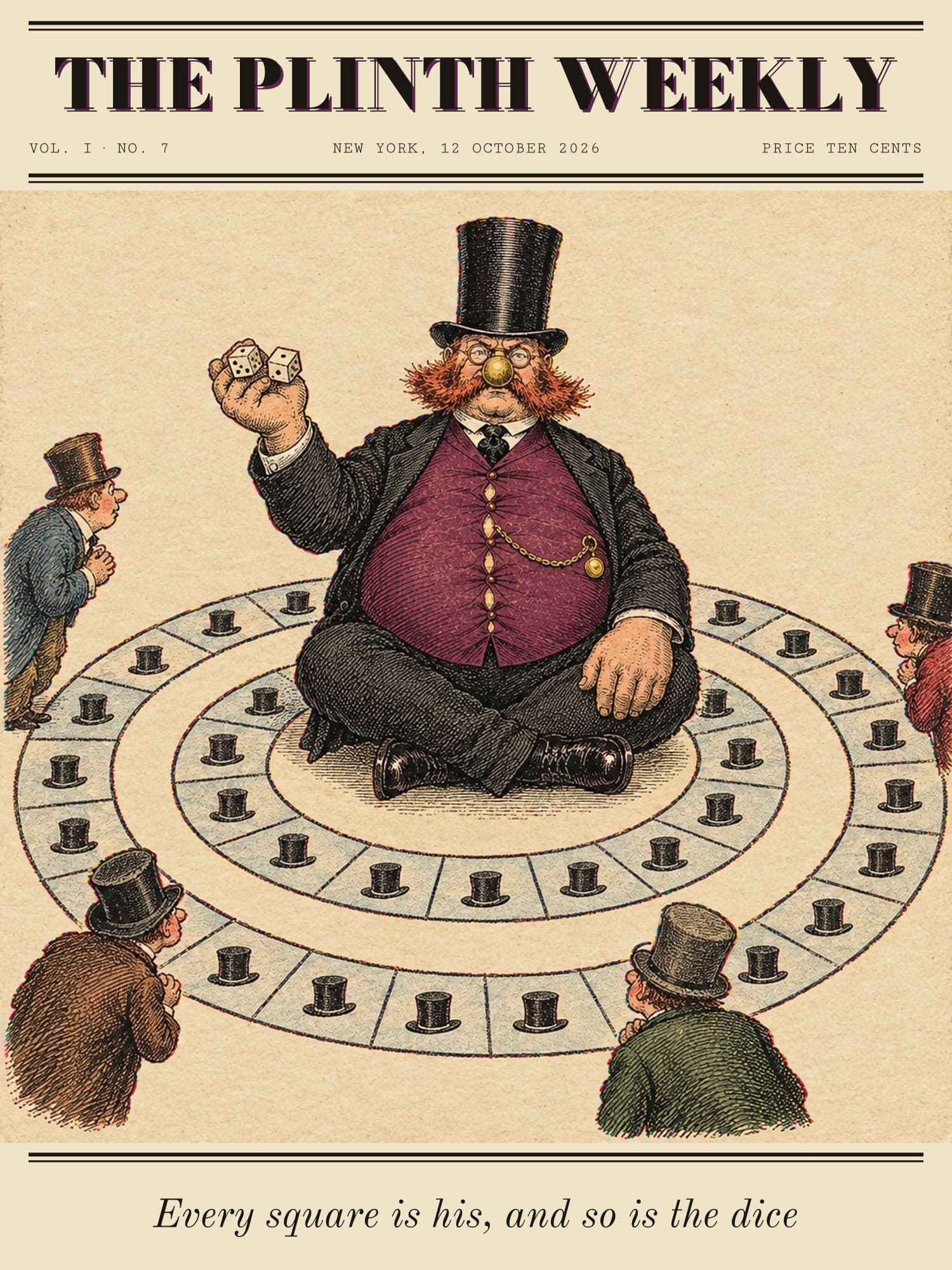 No. 7 · Edition of 25A Board Game of His OwnEvery square is his, and so is the dice
 No. 8 · Edition of 25The RailroadAll tracks lead to one station
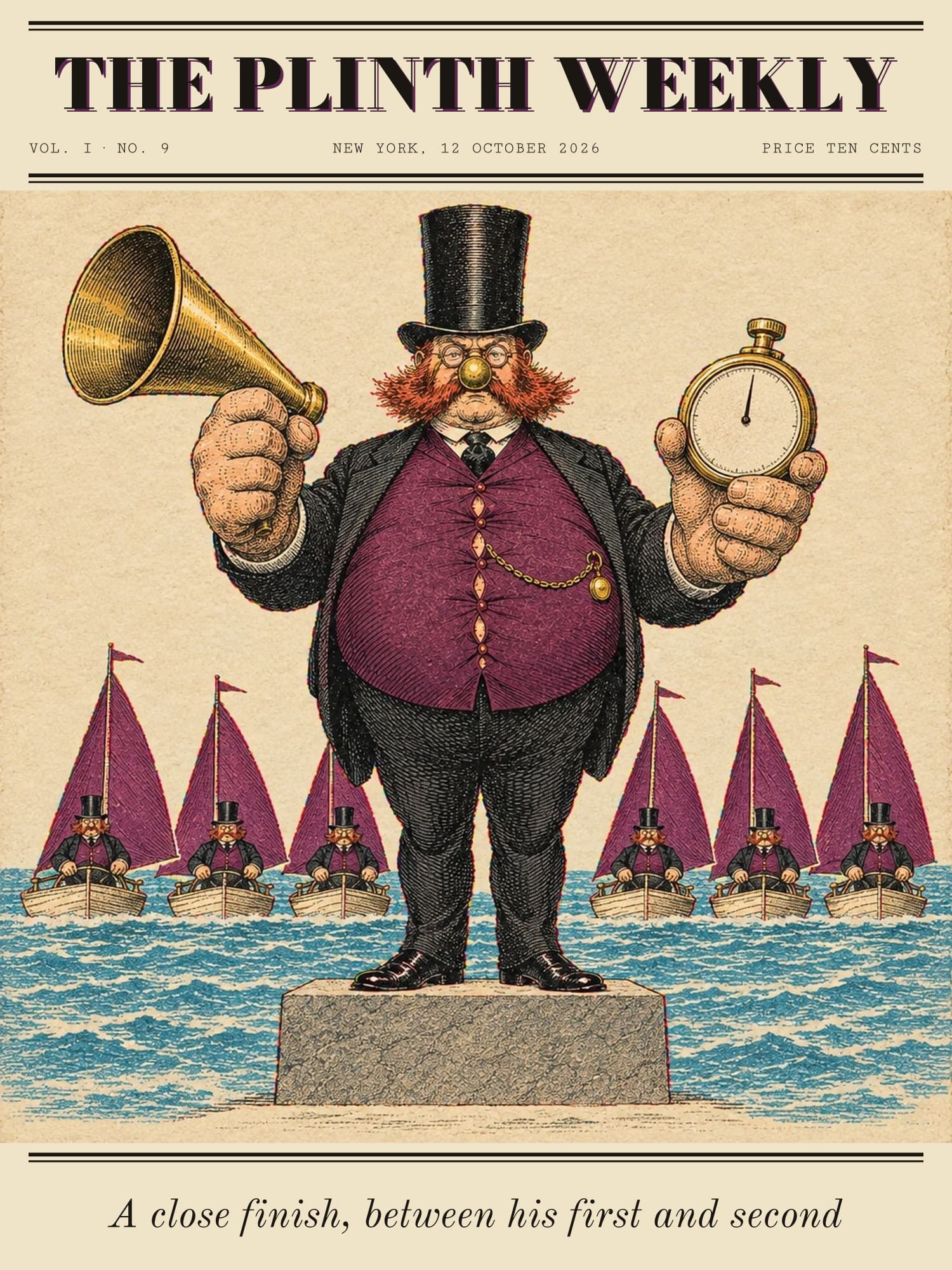 No. 9 · Edition of 25The RegattaA close finish, between his first and second
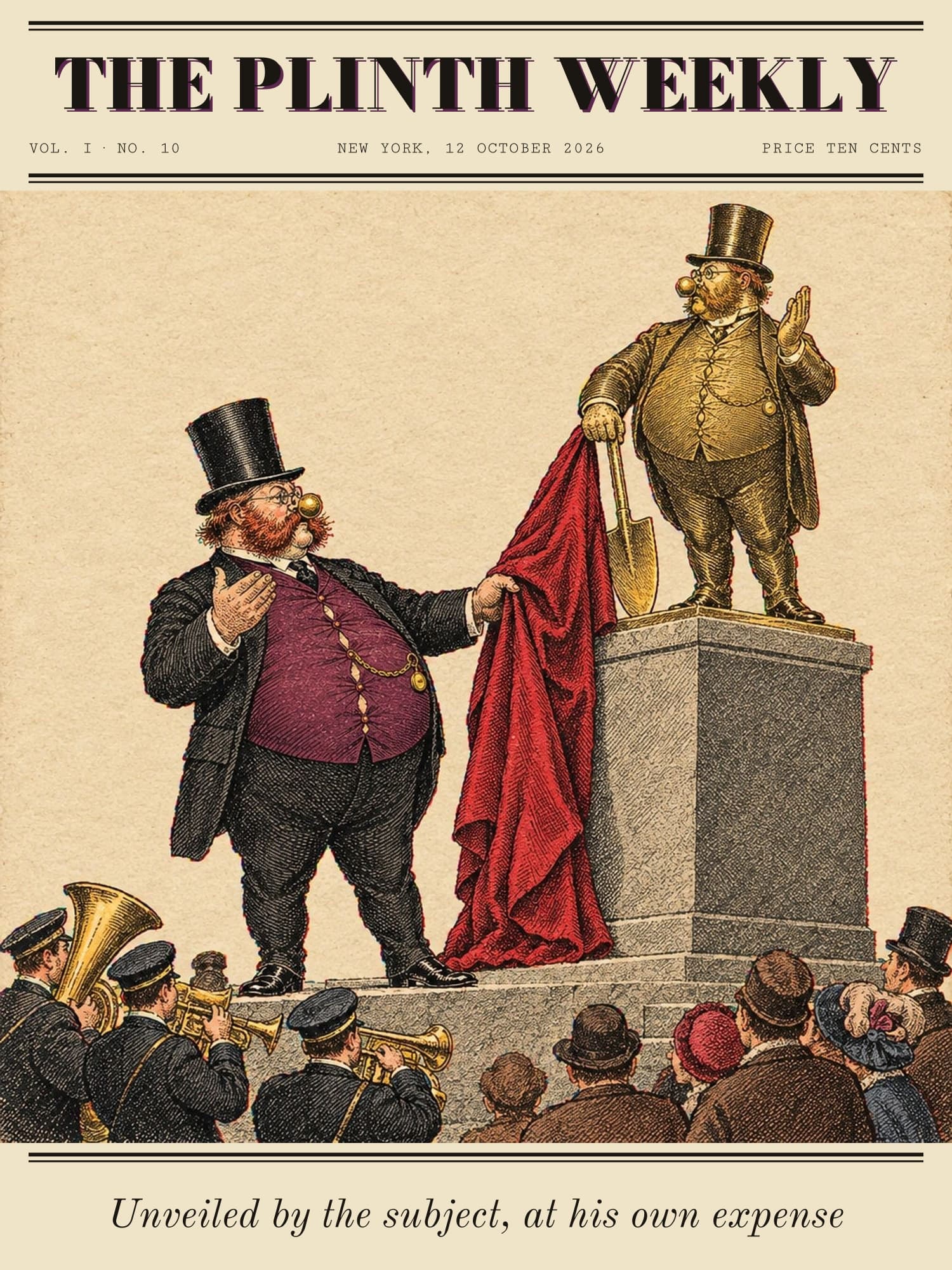 No. 10 · Edition of 25Our FounderUnveiled by the subject, at his own expense
Drawn after Keppler’s weekly
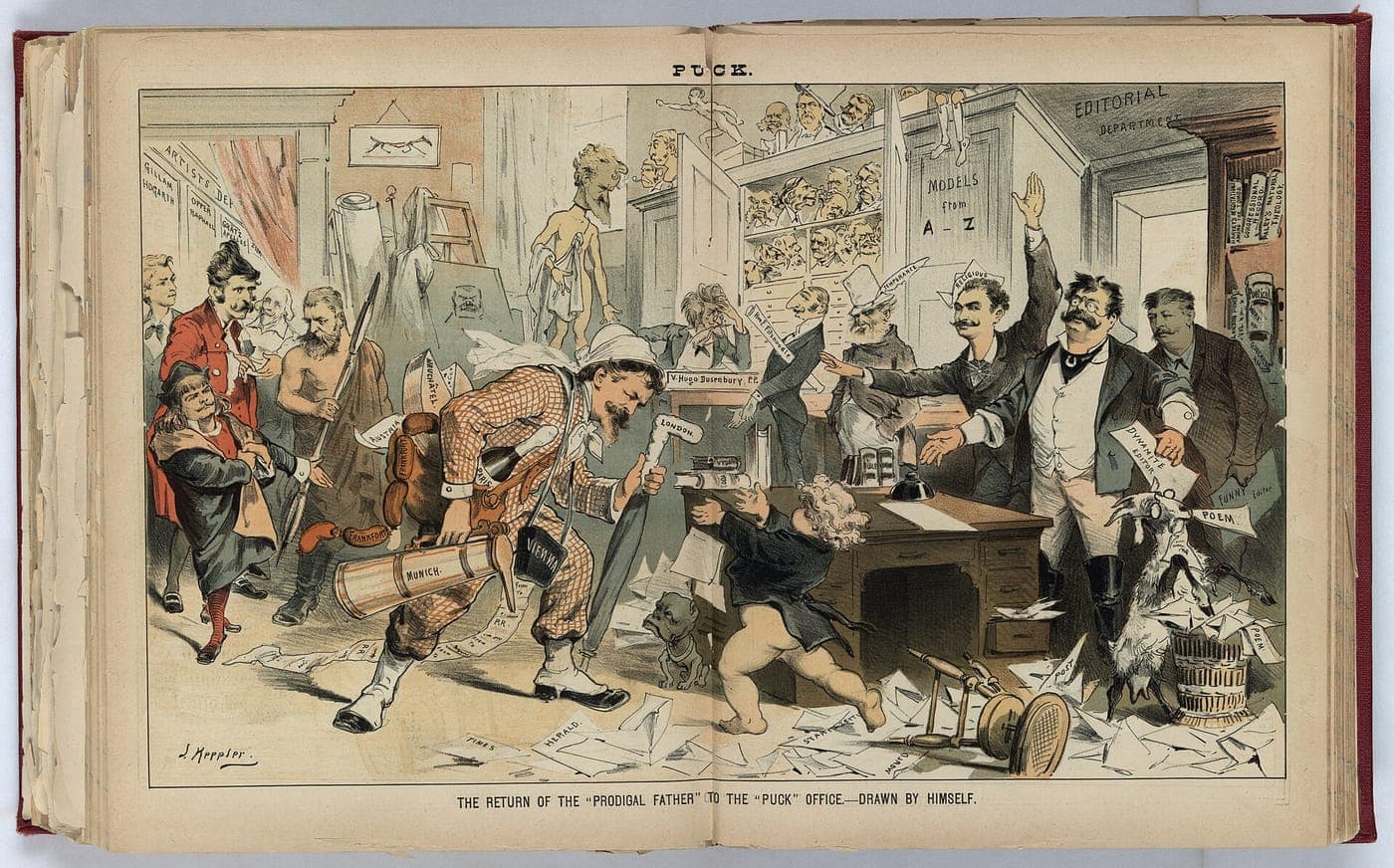
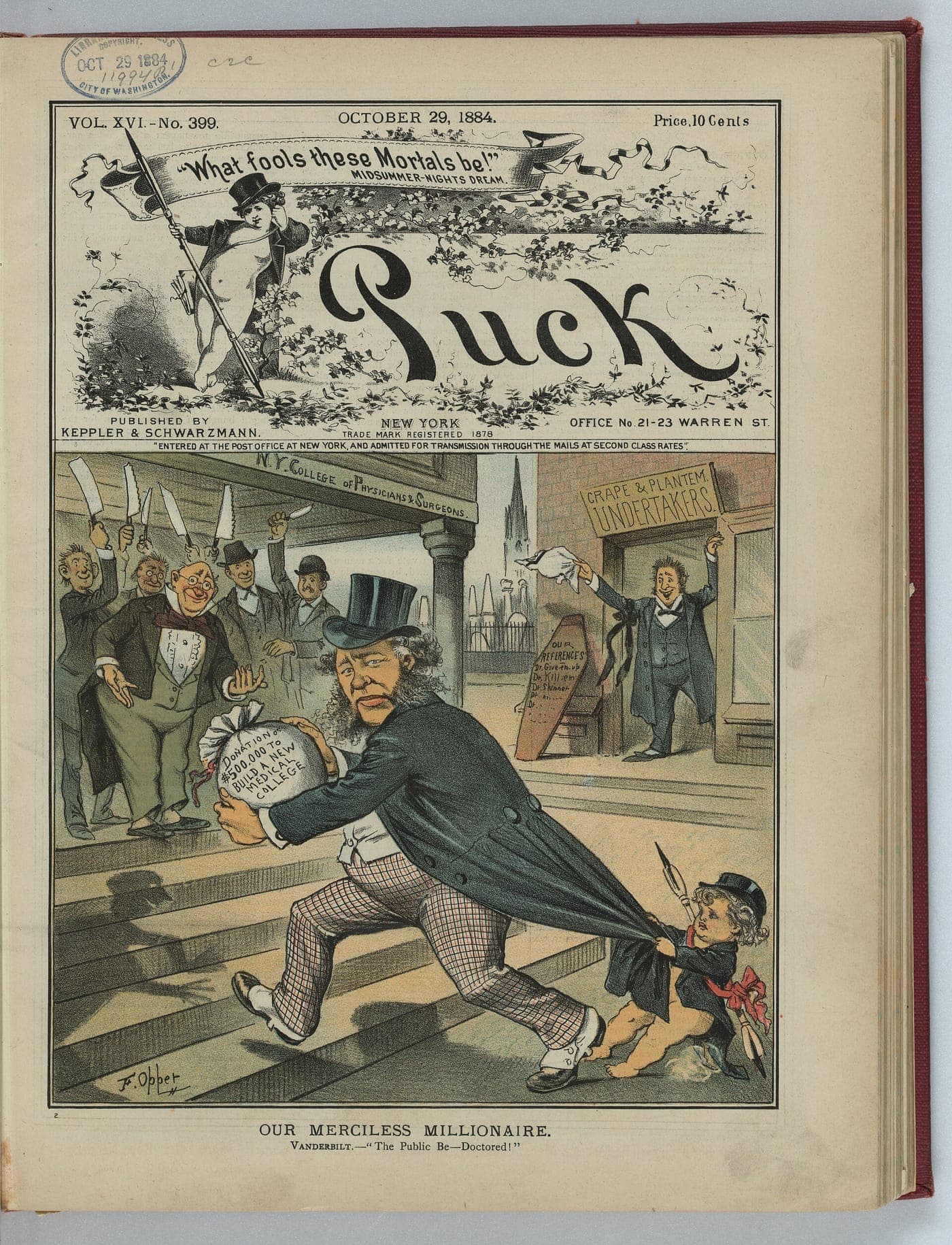
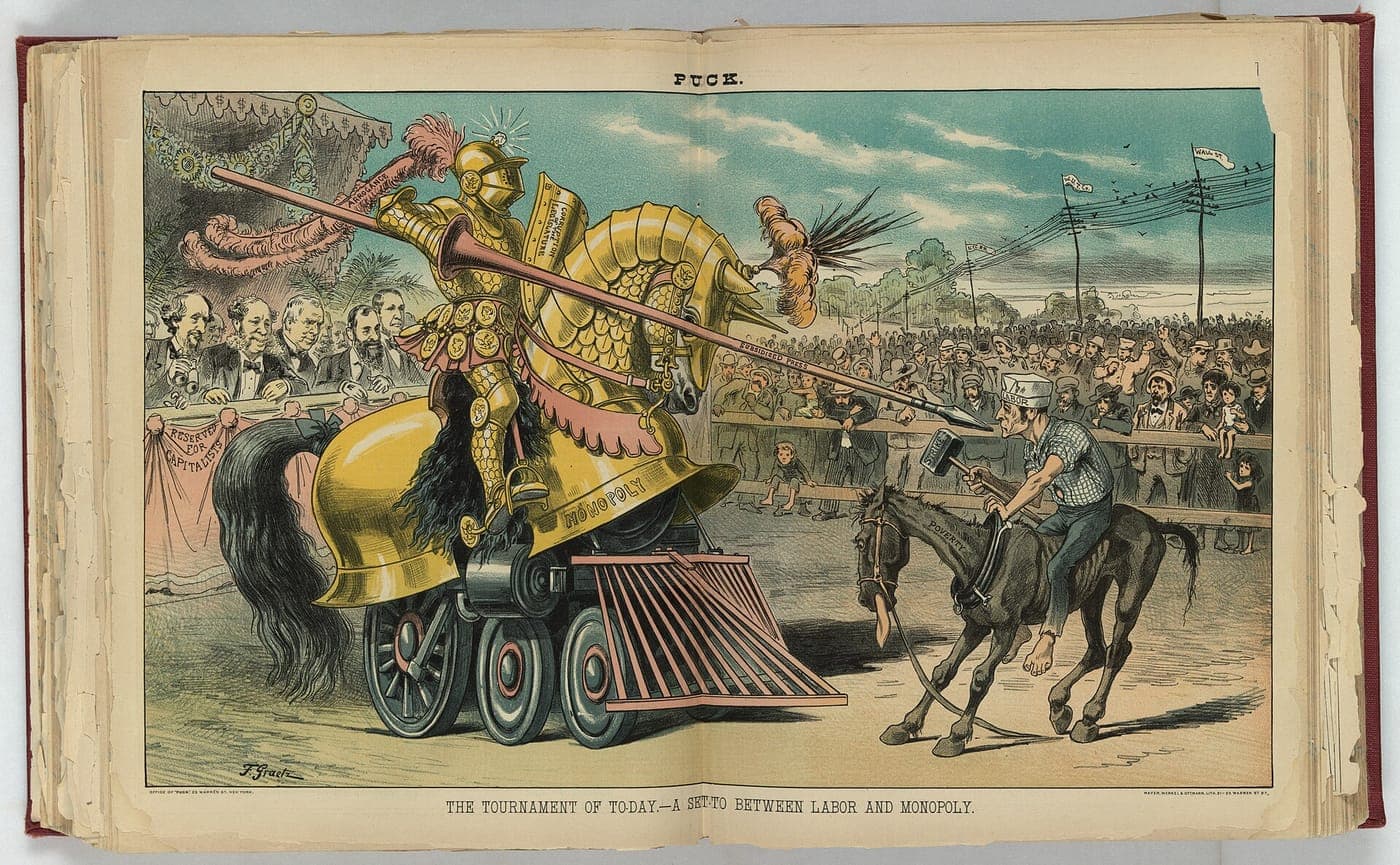
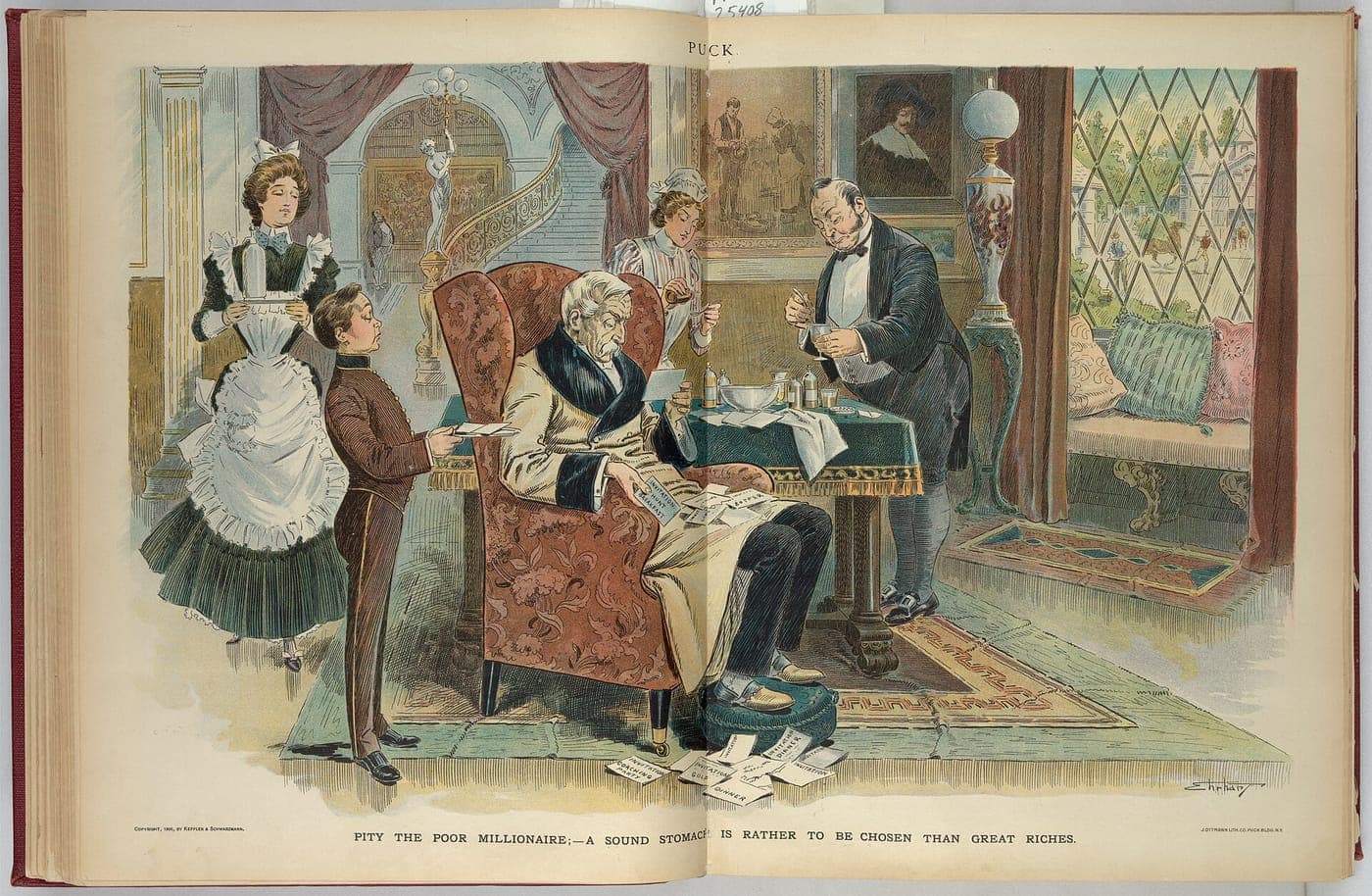
In 1877 Joseph Keppler, an Austrian lithographer, began printing Puck in colour from limestone, and for forty years its covers and centre spreads drew the trusts, the railroads and the men who owned them larger than life.
Bernhard Gillam, Frederick Opper and Friedrich Graetz drew beside him. Their plates are in the Library of Congress, and the four below are in the public domain. Plinth is our own invention, made for now: the covers borrow the manner and none of the faces.
Sit for Your Cover
Consent first
Two boxes before any upload: the photograph is of you or you hold the sitter’s written permission, and the sitter is an adult.
One photograph
Face and shoulders, one person, ordinary clothes. We read it, paint from it, and never store it.
Your caption
Up to sixty characters, set in type under the picture. It may tease the sitter; it may not name a real person.
Approve, then print
See the cover first, choose a size, and the lab prints it as a giclée on canvas or paper. Delivery in the United States is included.
Read the Ledger
Each canvas is numbered in the order it was paid for, one to twenty-five, and struck through on its cover’s page the day it sells. No names, ever. A refunded number is struck and retired, never issued again, so a cover can close at fewer than twenty-five. The paper proof stays open, unnumbered.